
Climate & Environment
Monitoring climate change developments, extreme weather events, environmental policy shifts, energy transition progress, and the scientific, economic, and political dimensions of the environmental crisis.
Latest Developments

Infrastructure strikes in Iran war escalate global energy crisis
Infrastructure strikes tied to the Iran conflict are intensifying a global energy shortage, disrupting oil and gas facilities in a region already stressed by the closure of the Strait of Hormuz. The Strait, through which roughly a fifth of the world's oil normally passes, has been blocked, creating severe supply constraints and driving up energy prices worldwide. These infrastructure attacks are compounding the shortage by directly damaging production and export capacity in a strategically critical region. The dual crisis—supply route closure plus facility damage—threatens to push energy costs higher and could destabilize economies dependent on stable oil supplies. Markets are bracing for prolonged disruption unless the conflict stabilizes or alternative energy routes are secured.

Trump officials announce 10-gigawatt data center, gas plants for former Ohio uranium site - AP News
Trump administration officials announced plans to build a 10-gigawatt data center and natural gas plants on a former uranium production site in Ohio, part of a broader effort to expand energy infrastructure and attract tech investment. The project represents a strategic pivot for the abandoned industrial site, converting it from nuclear fuel production into a hub for artificial intelligence and computing facilities that require massive amounts of electricity. Data centers of this scale—10 gigawatts is enough to power roughly 7-8 million homes—are increasingly sought by technology companies training large language models and running cloud services, but they also demand significant fossil fuel backing to ensure reliable power supply. The announcement underscores the Trump administration's focus on pairing energy production with tech infrastructure while revitalizing economically distressed industrial regions in the Midwest. The project's timeline, funding sources, and specific location within the Ohio uranium site were not detailed in the initial announcement.

Over 5,500 told to evacuate flooding in Hawaii as officials warn that dam could fail
More than 4,000 residents in towns north of Honolulu have been ordered to evacuate as severe rains caused muddy floodwaters to inundate streets and swallow vehicles. Officials are warning that a 120-year-old dam poses a risk of failure amid the flooding. The evacuation underscores the immediate threat posed by both the current floodwaters and the potential structural failure of the aging dam infrastructure.
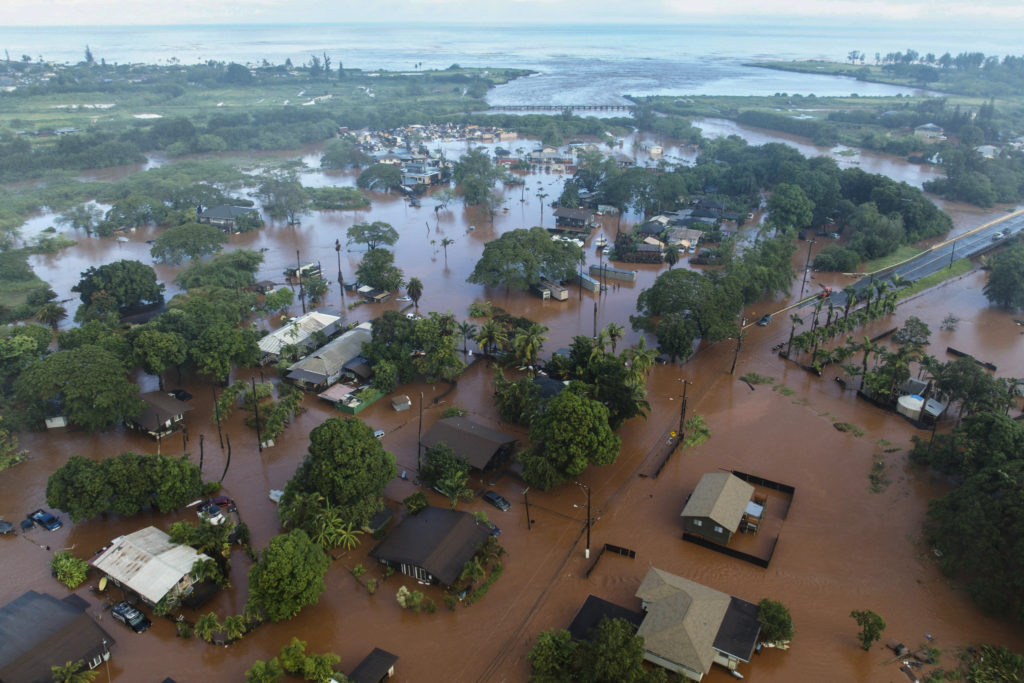
Officials warn 120-year-old Hawaiian dam could fail as thousands told to evacuate flooding
Hawaiian officials have ordered evacuations of thousands of residents after warning that a 120-year-old dam faces a potential structural failure. The alert comes after heavy rainfall from a recent storm caused widespread flooding across the islands, destroying roads and homes and raising water levels behind the aging dam infrastructure. Authorities have been monitoring the dam's conditions closely since last week's deluge, concerned that continued water pressure could trigger a catastrophic breach. A dam failure would send a torrent of water downstream, threatening additional communities beyond those already dealing with storm damage. The evacuation represents a precautionary measure as officials assess whether the structure can safely handle current water levels.
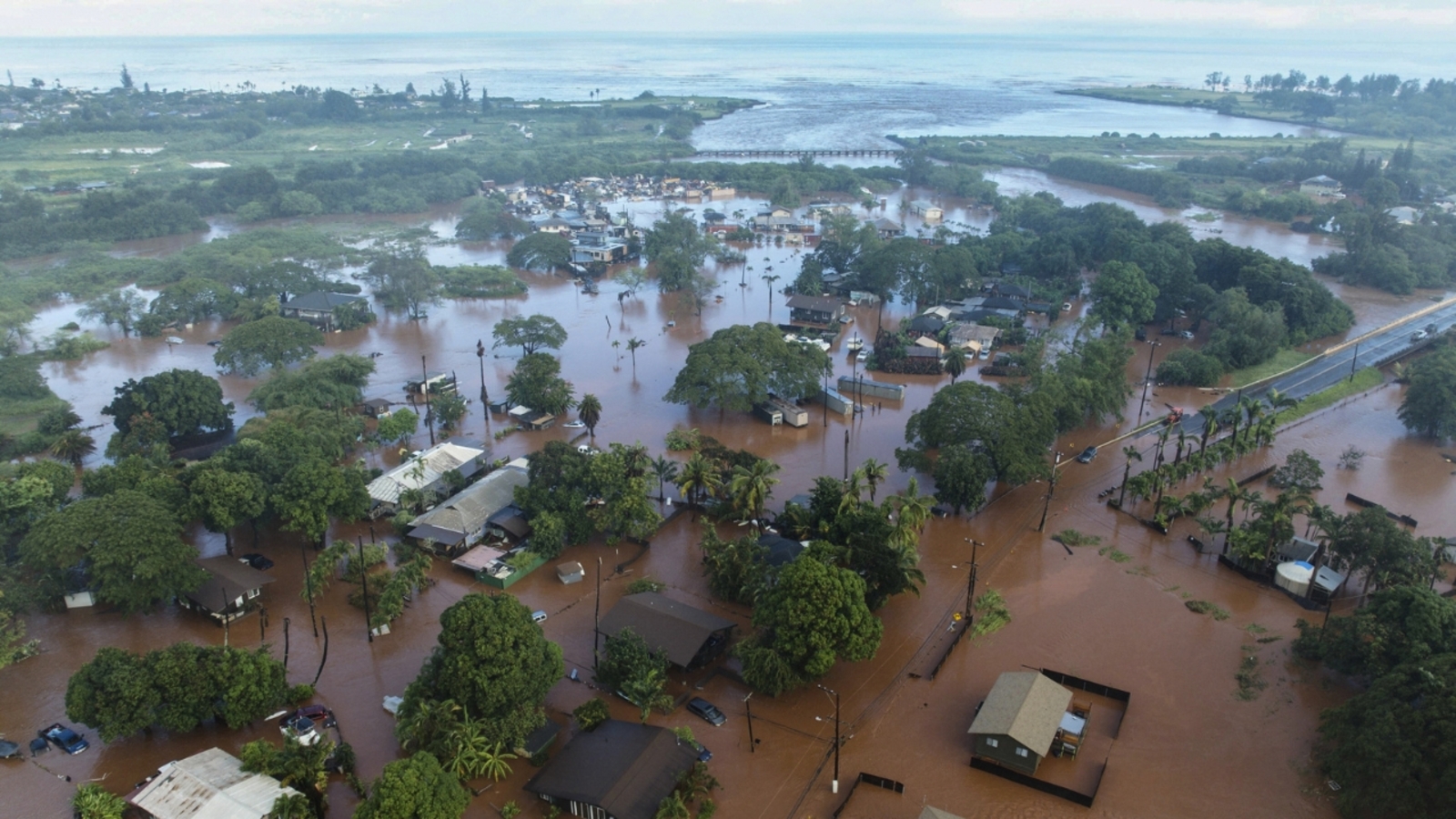
Oahu island: Over 4,000 told to evacuate flooding in Hawaii as officials warn 120-year-old dam could fail - ABC7 Los Angeles
More than 4,000 residents on Oahu have been ordered to evacuate due to flooding, with officials warning that a 120-year-old dam risks catastrophic failure. The evacuation order reflects immediate danger from both current flood conditions and the structural threat posed by the aging dam infrastructure. If the dam fails, it could release a massive surge of water into populated areas downstream, potentially causing severe damage and loss of life. The evacuation underscores Hawaii's vulnerability to extreme weather events and the risks associated with aging critical infrastructure across the islands. Authorities are monitoring the dam's structural integrity and water levels as the situation develops.
Key Facts
Extreme weather events continue to increase in frequency and severity
Source: NOAA
Energy transition policies face both progress and political headwinds
Source: Department of Energy
Climate science continues to refine projections and risk assessments
Source: NASA/NOAA
Environmental regulations are being reshaped by current administration
Source: EPA
Recent Highlights
Energy policy changes affect renewable sector
Latest climate data shows continued warming trends
Full Coverage (327 articles)
Showing 20 of 327 articles
Infrastructure strikes in Iran war escalate global energy crisis
Infrastructure strikes tied to the Iran conflict are intensifying a global energy shortage, disrupting oil and gas facilities in a region already stressed by the closure of the Strait of Hormuz. The Strait, through which roughly a fifth of the world's oil normally passes, has been blocked, creating severe supply constraints and driving up energy prices worldwide. These infrastructure attacks are compounding the shortage by directly damaging production and export capacity in a strategically critical region. The dual crisis—supply route closure plus facility damage—threatens to push energy costs higher and could destabilize economies dependent on stable oil supplies. Markets are bracing for prolonged disruption unless the conflict stabilizes or alternative energy routes are secured.
Trump officials announce 10-gigawatt data center, gas plants for former Ohio uranium site - AP News
Trump administration officials announced plans to build a 10-gigawatt data center and natural gas plants on a former uranium production site in Ohio, part of a broader effort to expand energy infrastructure and attract tech investment. The project represents a strategic pivot for the abandoned industrial site, converting it from nuclear fuel production into a hub for artificial intelligence and computing facilities that require massive amounts of electricity. Data centers of this scale—10 gigawatts is enough to power roughly 7-8 million homes—are increasingly sought by technology companies training large language models and running cloud services, but they also demand significant fossil fuel backing to ensure reliable power supply. The announcement underscores the Trump administration's focus on pairing energy production with tech infrastructure while revitalizing economically distressed industrial regions in the Midwest. The project's timeline, funding sources, and specific location within the Ohio uranium site were not detailed in the initial announcement.
Over 5,500 told to evacuate flooding in Hawaii as officials warn that dam could fail
More than 4,000 residents in towns north of Honolulu have been ordered to evacuate as severe rains caused muddy floodwaters to inundate streets and swallow vehicles. Officials are warning that a 120-year-old dam poses a risk of failure amid the flooding. The evacuation underscores the immediate threat posed by both the current floodwaters and the potential structural failure of the aging dam infrastructure.
Officials warn 120-year-old Hawaiian dam could fail as thousands told to evacuate flooding
Hawaiian officials have ordered evacuations of thousands of residents after warning that a 120-year-old dam faces a potential structural failure. The alert comes after heavy rainfall from a recent storm caused widespread flooding across the islands, destroying roads and homes and raising water levels behind the aging dam infrastructure. Authorities have been monitoring the dam's conditions closely since last week's deluge, concerned that continued water pressure could trigger a catastrophic breach. A dam failure would send a torrent of water downstream, threatening additional communities beyond those already dealing with storm damage. The evacuation represents a precautionary measure as officials assess whether the structure can safely handle current water levels.
Oahu island: Over 4,000 told to evacuate flooding in Hawaii as officials warn 120-year-old dam could fail - ABC7 Los Angeles
More than 4,000 residents on Oahu have been ordered to evacuate due to flooding, with officials warning that a 120-year-old dam risks catastrophic failure. The evacuation order reflects immediate danger from both current flood conditions and the structural threat posed by the aging dam infrastructure. If the dam fails, it could release a massive surge of water into populated areas downstream, potentially causing severe damage and loss of life. The evacuation underscores Hawaii's vulnerability to extreme weather events and the risks associated with aging critical infrastructure across the islands. Authorities are monitoring the dam's structural integrity and water levels as the situation develops.
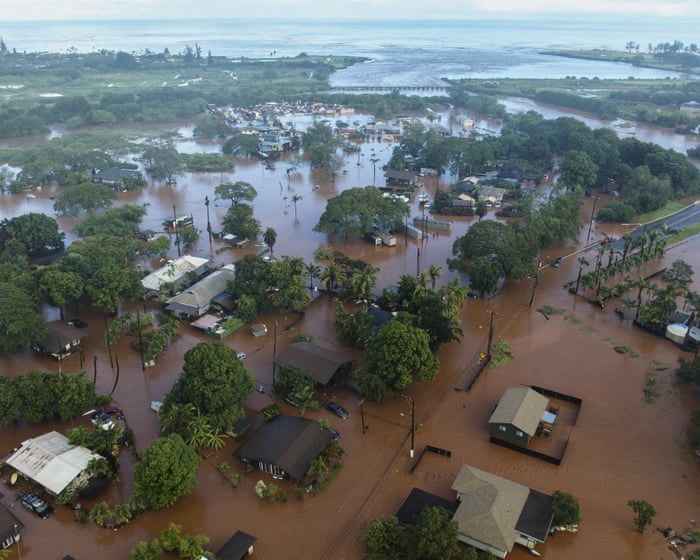
Thousands ordered to evacuate as Hawaii hit by severe flash floods
Thousands of residents on Oahu have been ordered to evacuate as severe flash floods swept through Hawaii on Friday, with officials warning that the Wahiawā dam could collapse at any time. The rapidly rising waters hit overnight, with videos showing streets and vehicles submerged in muddy floodwater as a powerful storm continued battering the state. The dual threat of immediate flooding and potential dam failure has left some residents at risk of being trapped by rising waters. The evacuation was triggered as the storm pushed across the Hawaiian islands this week, creating hazardous conditions across the northern part of the island.
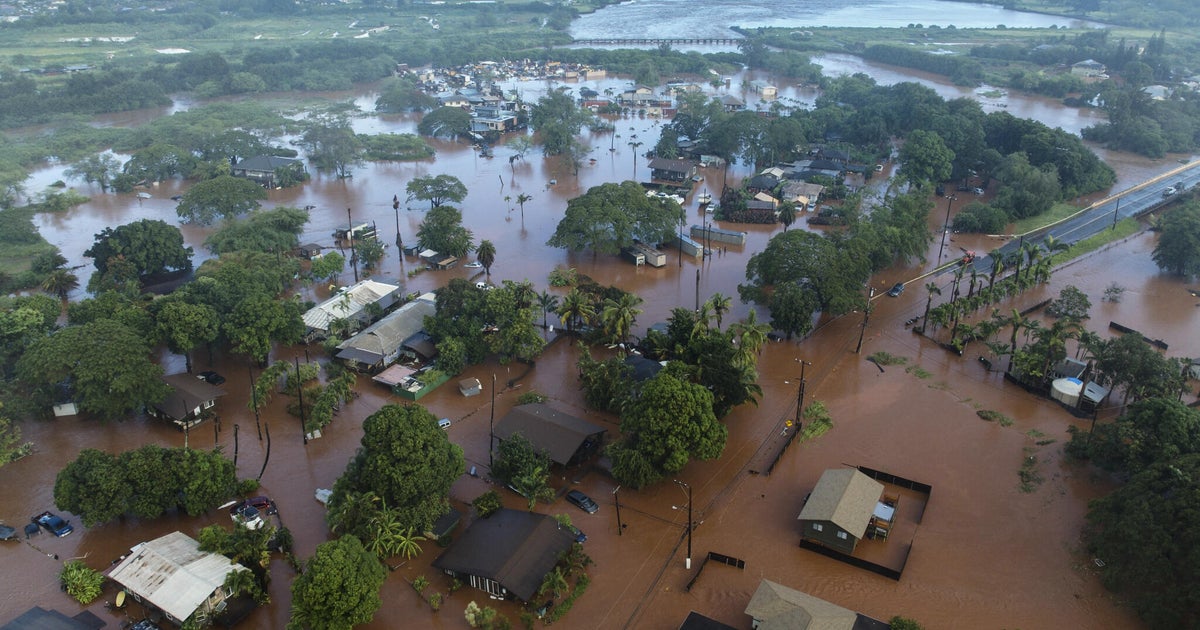
Hawaii flooding prompts evacuation orders for more than 4,000 people
Honolulu officials have ordered the evacuation of more than 4,000 residents after warning that the Wahiawa dam is failing or expected to fail soon. The dam failure threat comes amid flooding across Hawaii, creating an immediate risk to communities downstream of the structure. Officials did not specify a timeline for the anticipated failure, but the evacuation order underscores the acute danger posed by the combination of heavy rainfall and the dam's structural condition. Residents in the affected areas have been instructed to leave their homes and move to higher ground or designated shelter locations. The evacuation represents one of Hawaii's most significant emergency responses to weather-related infrastructure failure in recent years.

New York AG sues to uphold national emissions rules
New York Attorney General Letitia James and 40 states, counties, cities, and state agencies have filed suit against the federal government to block the EPA from repealing the 2009 endangerment finding that classified greenhouse gases as a threat to public health and welfare. The endangerment finding is the legal foundation for federal emissions regulations covering vehicles, power plants, and other major pollution sources. Repealing it would eliminate the EPA's authority to regulate greenhouse gases under the Clean Air Act, potentially invalidating decades of environmental rules. The lawsuit represents one of the largest coordinated legal challenges to Trump administration environmental policy rollbacks. The outcome will likely determine whether the EPA can continue enforcing emissions standards or must abandon them entirely.
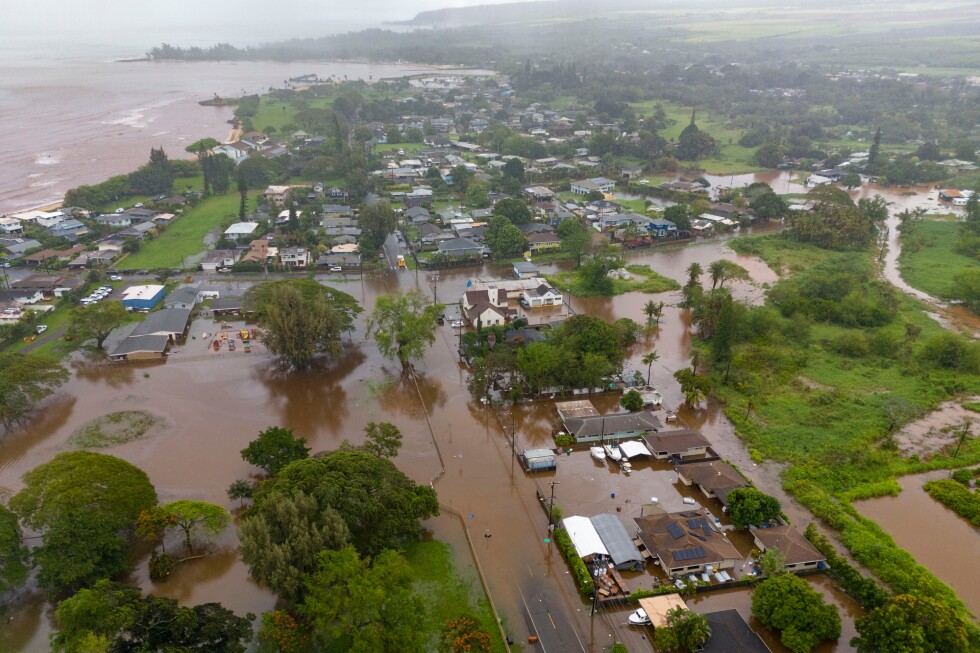
Over 5,500 told to evacuate flooding in Hawaii as officials warn 120-year-old dam could fail - AP News
Hawaiian officials have ordered more than 4,000 residents to evacuate due to flooding and warnings that a 120-year-old dam could fail. The aging infrastructure poses a risk of catastrophic structural collapse if water levels continue to rise, threatening downstream communities. The evacuation affects a significant portion of the affected region, as the dam's failure could unleash a wall of water through populated areas. Heavy rainfall and flooding conditions prompted the precautionary order, with authorities prioritizing immediate safety over waiting for confirmed dam damage. The evacuation remains in effect pending assessment of the dam's structural integrity and changes in weather conditions.
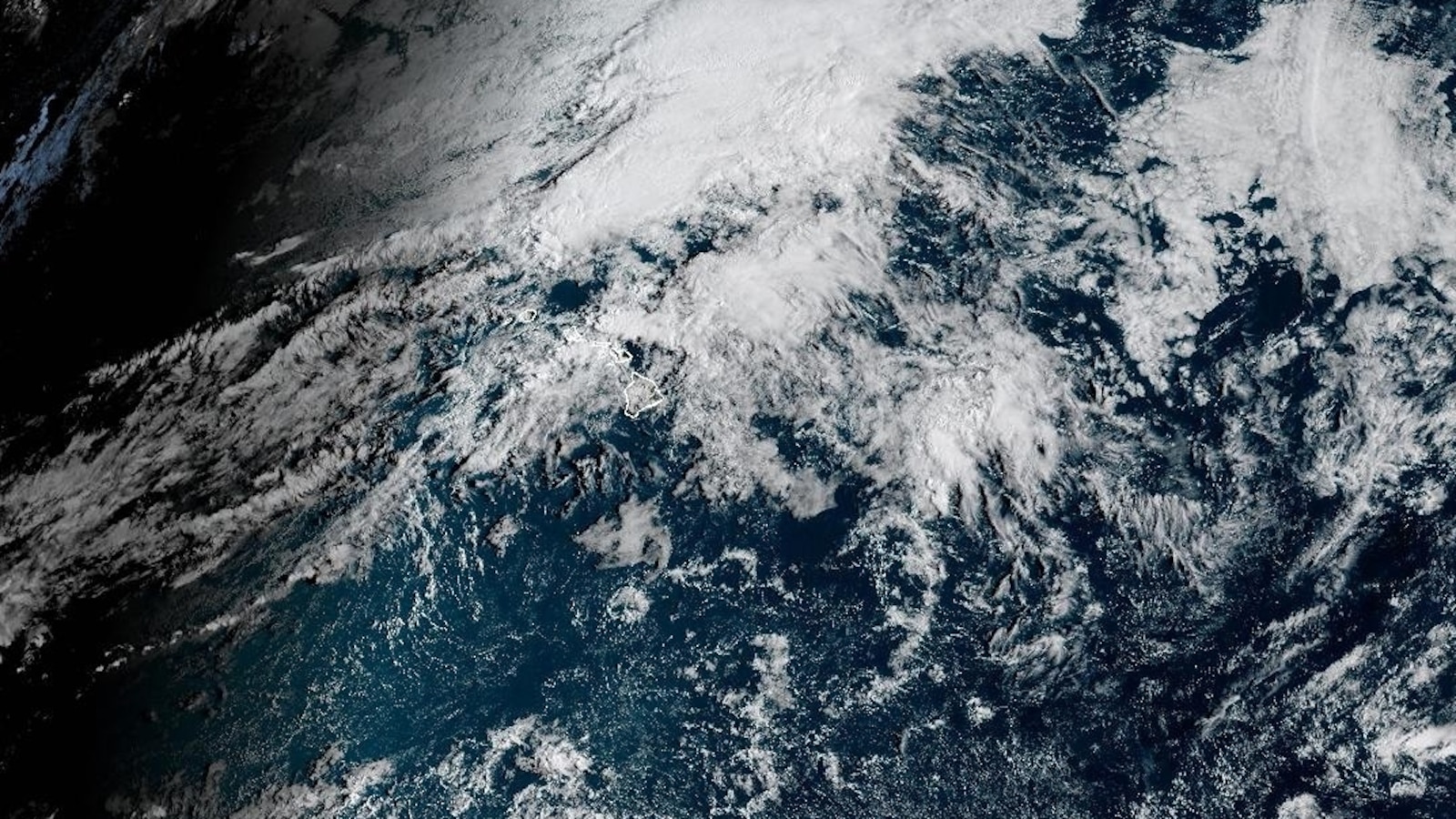
Dangerous flooding on Oahu prompts evacuations, warning of possible dam collapse
Heavy flooding has struck Oahu, Hawaii, forcing local authorities to evacuate residents and issue warnings of a potential dam collapse. The deluge has created dangerous conditions across the island, with officials mobilizing emergency response efforts to protect communities in the path of rising waters. A dam failure would catastrophically amplify flooding in downstream areas, putting additional lives and property at risk. The evacuations represent a precautionary measure as authorities assess whether the dam structure can withstand the current water pressure and flooding surge. Residents are being urged to move to higher ground and follow official guidance as the situation continues to develop.
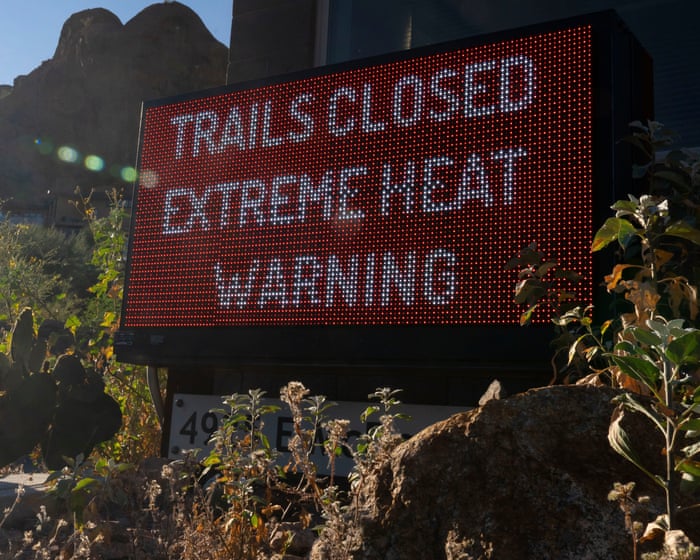
Arizona desert town breaks record for hottest March temperature in US history
Martinez Lake, a small community about 145 miles west of Phoenix, recorded 110°F on Thursday, breaking the record for the hottest March temperature ever measured in the United States. The reading was confirmed by the National Weather Service as part of a broader southwest heat wave gripping the region in late winter. March temperature records are significant markers of climate patterns, as they typically reflect seasonal transitions rather than peak summer heat, making such extreme readings unusual for the month. The record underscores intensifying heat trends in the American West, where desert communities are increasingly experiencing unseasonable temperature spikes. The scorching conditions have raised concerns about early-season heat stress on the region's infrastructure, water supplies, and vulnerable populations.

Flights, petrol cars and cruise ships: Amsterdam bans fossil fuel ads
Amsterdam has become the first capital city to legally ban advertising for fossil fuel products including flights, petrol cars, and cruise ships, according to a new municipal ordinance. The move reflects a broader global trend of cities removing climate-polluting advertisements from public spaces as a strategy to reduce greenhouse gas emissions. Dutch activists are now pressing for the restrictions to be extended nationwide, expanding the ban beyond the capital. The policy targets how fossil fuel industries market their products rather than the industries themselves, representing a growing effort by cities to use municipal power to combat climate change. It remains unclear how enforcement will work and whether other European capitals will follow Amsterdam's example.
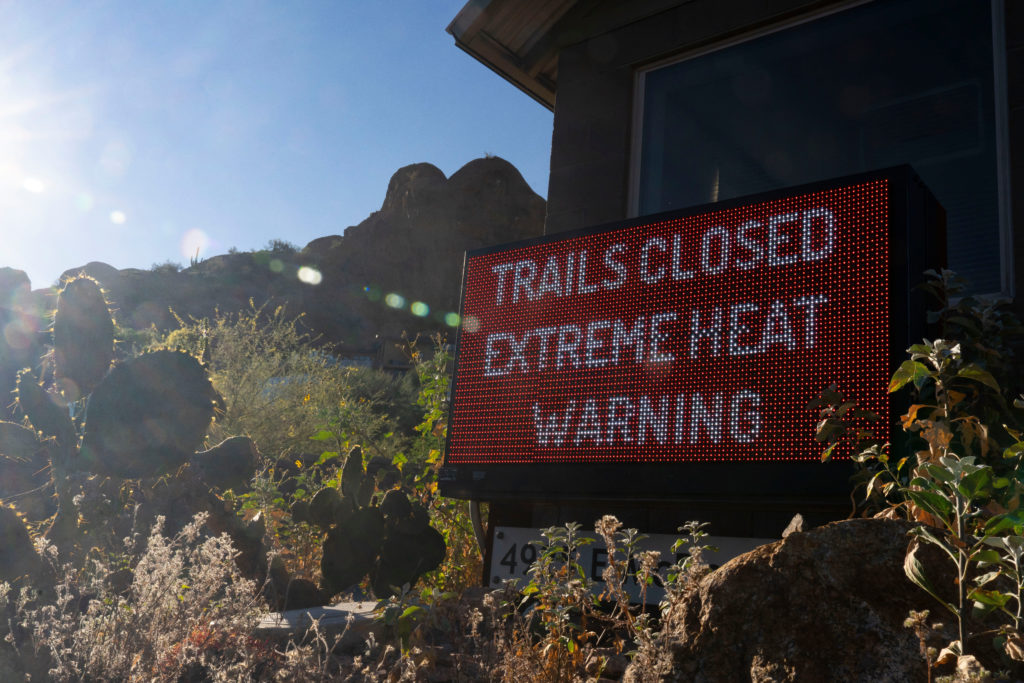
The Southwest smashing heat records in March 'is what climate change looks like'
The Southwest is experiencing record-breaking heat in March, with temperatures far exceeding historical norms for the season. Scientists attribute the unseasonable warmth to the cumulative effects of global warming, which is intensifying extreme weather patterns across the region. This represents a continuation of a troubling trend: extreme weather events—from heatwaves to droughts—are becoming more frequent and severe as Earth's climate warms. The March heat threatens to worsen wildfire risk, strain water supplies already stressed by prolonged drought, and set the stage for an even more dangerous fire season ahead. Experts say such events are a direct manifestation of how climate change is reshaping weather patterns globally, not isolated anomalies.
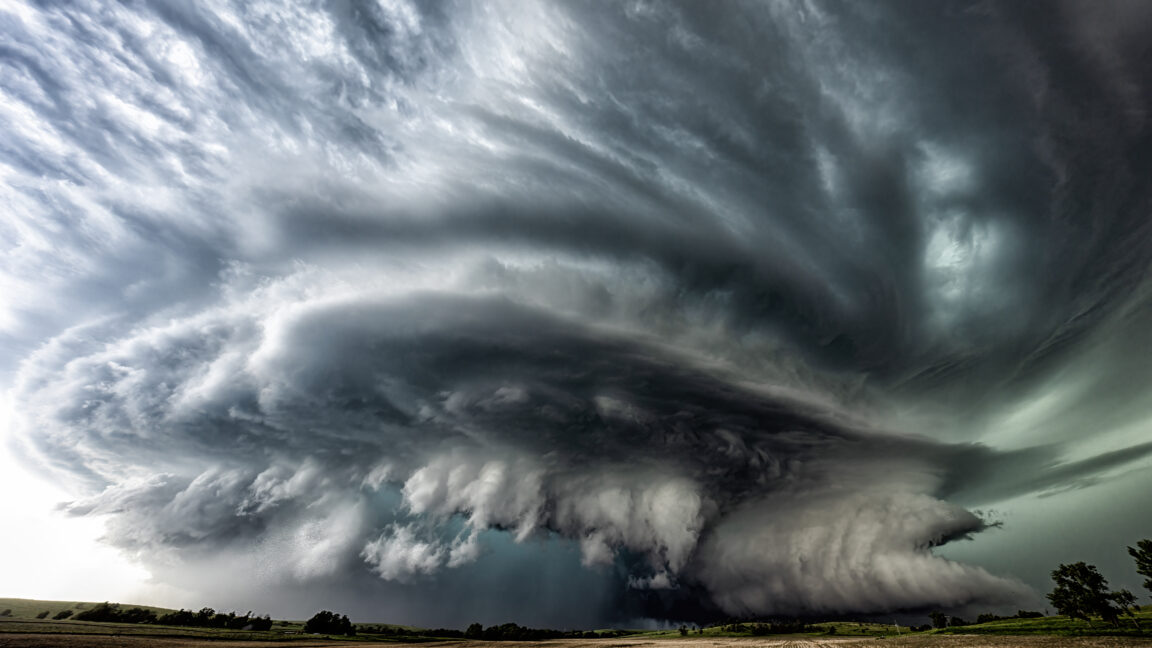
The US is looking at a year of chaotic weather
Despite 2025 ranking as the third-hottest year on record, the US experienced relatively few climate disasters—no major hurricane landfalls and wildfire acres burned below the 10-year average. Starting this week, a high-pressure ridge will bring record-breaking temperatures across the West, with the National Weather Service predicting temperature records will break in dozens of locations from California to Tennessee and Missouri. Compounding this immediate heat threat, forecasting models predict a strong El Niño event will likely emerge later this year, creating conditions for prolonged unpredictable and extreme weather extending into 2026. The NWS has issued heat warnings for parts of California, Arizona, and Nevada, and fire warnings for Wyoming, Nebraska, South Dakota, and Colorado.

Unprecedented March heat wave in SoCal has experts worried about what comes next - Los Angeles Times
Southern California is experiencing an unusual heat wave in March that has prompted concern among climate and weather experts about intensifying temperature patterns. The timing of extreme heat this early in the spring season is atypical for the region and suggests a departure from historical weather patterns. Such early-season heat waves can strain power grids, increase wildfire risk, and signal broader shifts in regional climate conditions heading into summer months. Experts worry this trend may foreshadow even more severe heat events during the hotter months ahead. The phenomenon underscores growing concerns about how climate patterns are reshaping seasonal weather across Southern California.

Trump’s policies on toxic chemicals fail all of us — including MAHA
The Trump administration's policies on toxic chemicals are drawing criticism for failing to protect public health, according to this opinion piece. The article argues that Americans broadly support stricter regulation of hazardous substances in food, water, and consumer products, yet current administration policies fall short of that expectation. The critique extends to Make America Healthy Again (MAHA), suggesting that even initiatives framed around health improvement are not adequately addressing chemical contamination in everyday products. The piece implies a disconnect between public demand for safety and the administration's regulatory approach to toxic substances.

Hochul proposes weakening New York’s climate law - Politico
Governor Kathy Hochul of New York has proposed weakening the state's climate law, according to Politico. The proposal comes as Hochul faces pressure to balance environmental commitments against economic and political concerns. New York's current climate legislation sets some of the nation's most aggressive emissions reduction targets, and any rollback could signal a shift in the state's climate policy direction. The move may face resistance from environmental groups and progressive lawmakers who have championed the strict standards. The proposal's fate will likely depend on the state legislature's response and broader political dynamics around climate policy in New York.

Heat records shattered across Southwest as climate change impacts intensify - AP News
Multiple heat records have been broken across the Southwest, with temperatures reaching dangerous levels in the region. The extreme heat reflects the broader pattern of climate change intensifying weather extremes, particularly in areas already prone to high temperatures. Such record-breaking heat poses immediate risks to public health, strains power grids, and can trigger wildfire conditions. The Southwest has experienced escalating temperature records over the past decade as global warming accelerates atmospheric warming. This trend underscores the region's vulnerability to future climate impacts and the urgency of adaptation planning for infrastructure and communities.
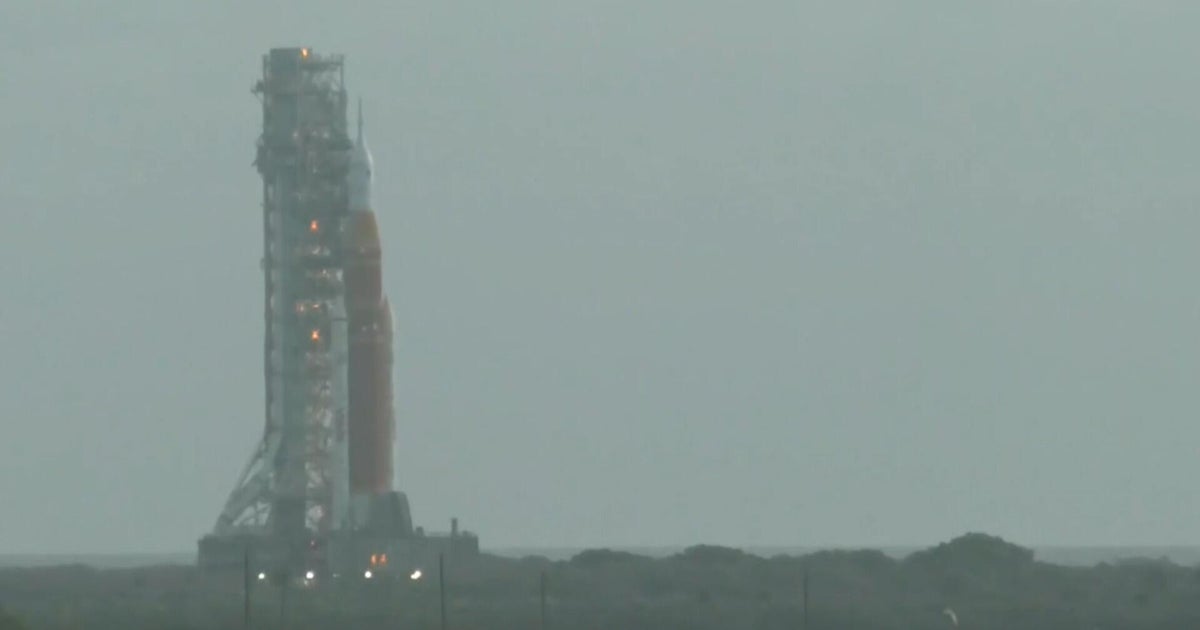
Repaired Artemis II rocket returns to launch pad
NASA has returned the Artemis II rocket to the launch pad following repairs to address an issue that forced the spacecraft to be rolled back last month. The rocket is designed to carry astronauts around the far side of the moon as part of NASA's effort to return humans to lunar exploration. The agency is targeting early April for the launch, marking a significant milestone in the Artemis program's timeline to establish sustained human presence on and around the moon. The repair and return to the pad represent progress on one of NASA's most ambitious projects, though the mission has already experienced delays from its original schedule. A successful Artemis II launch would pave the way for the subsequent Artemis III mission, which aims to land astronauts on the lunar surface.

Heatwave scorching US west ‘virtually impossible’ without climate crisis, say scientists - The Guardian
Scientists have attributed an ongoing heatwave scorching the U.S. West to human-caused climate change, stating the extreme temperatures would be virtually impossible without the climate crisis. The assessment reflects a growing scientific consensus that rising global temperatures are intensifying heat events across the region, making previously rare weather patterns more frequent and severe. Heatwaves of this magnitude pose direct threats to public health, strain power grids, and increase wildfire risk across western states. The attribution underscores the accelerating connection between greenhouse gas emissions and extreme weather, a relationship climate researchers have increasingly documented through rapid-response studies in recent years.